

For apparel brands, retailers, garment factories, uniform suppliers, and third-party logistics companies, rfid tag clothing technology is becoming a practical way to control inventory and warehouse movement at item level. Instead of counting garments by hand or scanning barcodes one by one, teams can use RFID tags to identify many pieces of clothing in seconds.

RFID Tags For Clothing
This matters because clothing inventory is naturally complex. A single style may have many sizes, colors, seasons, batches, and packaging formats. Garments move through receiving, quality control, storage, picking, packing, shipping, returns, and replenishment. When item-level visibility is weak, warehouses face stock discrepancies, slow audits, shipping errors, lost garments, and poor fulfillment accuracy. RFID tags give each item a digital identity that can be tracked through the warehouse workflow.
What Is RFID Tag Clothing in Warehousing?
RFID tag clothing means a garment carries an RFID tag, label, hang tag, or embedded textile tag that can be read wirelessly. Each tag has a unique encoded identity. RFID readers capture that identity and send it to warehouse, inventory, ERP, or retail software. The software then connects the tag ID to product information such as SKU, style, size, color, carton, order, location, or shipment status.
Most apparel warehousing applications use passive UHF RFID because it supports bulk reading and practical read distances. Passive RFID tags do not need batteries. They respond when energized by a reader signal, which makes them thin, cost-effective, and suitable for high-volume garment tagging.
Unlike barcode labels, RFID tags do not need to be visible to the scanner. A handheld reader can audit a rack, a fixed portal can verify cartons at a dock door, and a tunnel reader can scan packed garments moving through a conveyor. This ability to read multiple items without line of sight is the main reason RFID is valuable for apparel inventory and warehousing.
Why Clothing Warehouses Need RFID
Apparel warehouses often manage fast-moving SKUs with high variation. The same product family may include dozens of size and color combinations. Seasonal demand changes quickly. Retail replenishment needs accurate stock. E-commerce orders require reliable item availability. Manual inventory counts cannot keep up with this level of complexity without creating labor pressure and delays.
RFID improves warehouse visibility by turning every garment into a traceable item. When receiving staff scan incoming cartons, the system can compare actual items against purchase orders or advance shipping notices. When pickers prepare outbound orders, RFID can confirm that the right styles, colors, and sizes are included. When managers audit stock, RFID can reveal misplaced items faster than a manual search.
For B2B operations, the result is not only faster counting. The deeper value is better decision-making. Accurate data supports replenishment, allocation, returns processing, customer claims, loss prevention, and cycle counting. RFID reduces the gap between what the system says and what is physically in the warehouse.
How To Use RFID Tags for Apparel Inventory
The first step is to define the inventory problem. Some warehouses need faster cycle counts. Others need better receiving accuracy, shipping verification, or location control. The workflow goal determines whether the business needs handheld readers, fixed portals, tunnel readers, RFID cabinets, printer-encoders, or a combination of devices.
Next, tag the clothing items at the right point in the supply chain. Retail apparel may receive RFID hang tags during production. Uniforms and workwear may use sewn-in or heat-seal RFID textile labels. If garments arrive without tags, the warehouse can encode and attach tags during receiving or value-added service operations.
After tagging, each RFID ID must be linked to the correct item record. This association is critical. A tag that is not connected to the right SKU, size, color, or order will only create noise. Good master data, serialization rules, and encoding checks are essential for accurate RFID inventory management.
Once the tags are active in the system, the warehouse can use RFID at key control points. Receiving scans confirm inbound goods. Put-away scans verify location. Cycle counts update stock accuracy. Picking scans validate order lines. Packing scans confirm carton content. Dock-door scans check outbound shipments. Returns scans help identify items quickly and route them back to stock, inspection, or repair.
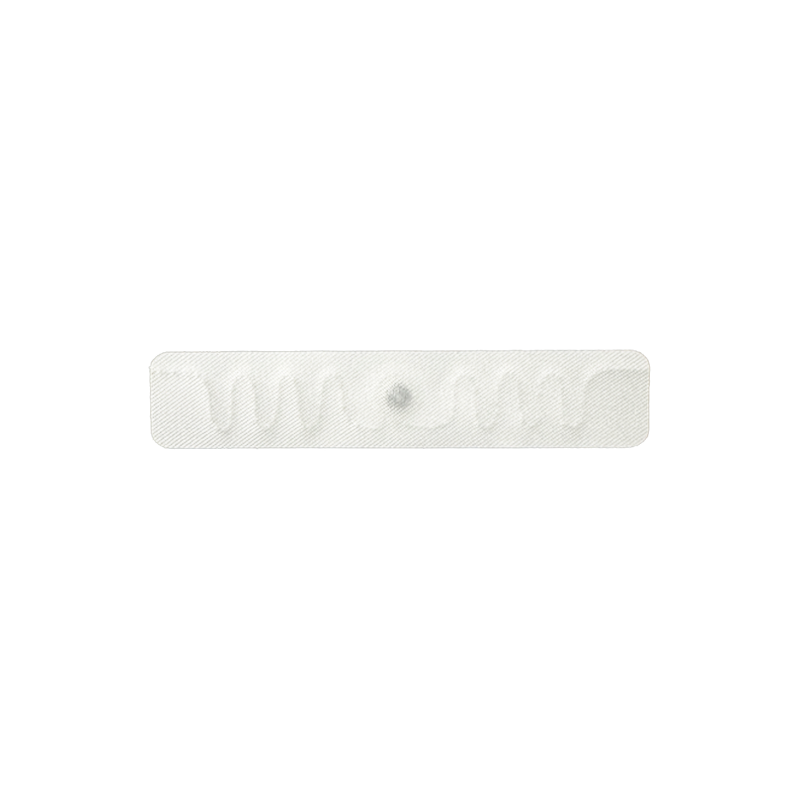
Textile RFID Laundry Tag
RFID in Receiving
Receiving is one of the strongest starting points for apparel RFID. When inbound cartons arrive, a fixed reader portal or handheld reader can capture tag data and compare the scan with the expected inbound list. This helps identify shortages, overages, wrong styles, and mixed cartons before goods enter available stock.
In a traditional process, receiving staff may open cartons and scan barcodes individually. This is slow and can still miss items when many similar garments are packed together. RFID allows faster validation. If the read data does not match the expected shipment, staff can investigate immediately instead of discovering the error during picking or customer fulfillment.
RFID in Storage and Location Control
After receiving, garments must be stored in the correct zone, rack, bin, carton, or hanging area. RFID can support location control by scanning items during put-away and linking them to a storage location. Handheld readers can also find misplaced clothing more quickly by detecting tags near the operator.
For high-density apparel storage, RFID helps reduce search time. A warehouse may have hundreds of similar cartons or racks. If a style is physically in the wrong location, staff can spend valuable time looking for it. RFID location audits help identify discrepancies early and maintain cleaner stock records.
RFID in Cycle Counting
Cycle counting is one of the most visible benefits of RFID. Instead of closing areas for manual counts, teams can scan racks, shelves, or cartons with handheld readers. A count that once took hours may take minutes, depending on the layout and item volume. This makes it possible to count more often without disrupting operations.
Frequent RFID cycle counts improve data quality. Apparel inventory accuracy is especially important for omnichannel fulfillment, where an item may be sold online based on store or warehouse availability. If inventory records are wrong, the business may oversell, cancel orders, delay shipments, or purchase unnecessary safety stock.
RFID in Picking and Packing
Picking errors are costly in apparel because size and color mistakes are common. RFID can help confirm that the correct garment is selected for an order. A picker may use a handheld reader to verify items before moving them to packing, or a packing station may scan the entire order batch automatically.
At packing, RFID can compare the scanned contents against the order. If a carton contains the wrong size or missing item, the system can alert staff before shipment. This reduces returns, customer complaints, chargebacks, and rework. For B2B apparel distribution, shipment accuracy directly affects customer trust.
RFID in Outbound Shipping
Outbound RFID verification can happen at a tunnel, conveyor, packing station, or dock door. The system checks whether the items leaving the warehouse match the sales order, transfer order, or store replenishment plan. This is useful for retailers, distributors, and uniform suppliers that ship many similar garments to multiple locations.
Dock-door verification is especially helpful when cartons are staged close together. The system can reduce the risk of loading the wrong carton onto the wrong route. When RFID events are connected to WMS or ERP records, managers can create a stronger digital trail for every outbound shipment.
Choosing RFID Tags for Clothing Inventory
RFID tag selection should match the garment and warehouse process. Disposable retail hang tags may be suitable for merchandise sold to consumers. Sewn-in textile RFID tags are better for reusable garments, uniforms, rental clothing, and laundry workflows. Label size, antenna design, attachment method, and read range all affect performance.
Companies evaluating apparel tagging can review RFID Tags For Clothing for garment inventory and warehouse tracking applications. Samples should be tested with the actual clothing material, packaging format, carton density, reader hardware, and scanning distance used in daily operations.
For external sourcing and category planning, buyers can also explore UHF RFID tag options, because UHF is widely used for item-level apparel inventory. The final choice should consider read performance, durability, encoding requirements, printing needs, and total project cost.
Software and Integration Requirements
RFID data becomes valuable only when it is connected to business software. A reader event should update inventory, location, order status, shipment validation, or exception reports. This may require integration with WMS, ERP, POS, retail inventory platforms, laundry systems, or custom dashboards.
Middleware often plays an important role. It filters duplicate reads, applies business rules, and sends clean events to the main system. Without proper filtering, readers may capture stray tags from nearby zones or repeated reads from the same item. Good software design turns raw tag reads into useful operational records.
Implementation Best Practices
- Start with a measurable goal: Define whether the project targets receiving accuracy, faster audits, better picking, or shipment validation.
- Use clean master data: SKU, size, color, style, and location records must be accurate before RFID can improve operations.
- Test real workflows: Pilot with actual garments, cartons, racks, reader positions, and operator behavior.
- Standardize tag encoding: Serialization rules should prevent duplicate IDs and support reliable item tracking.
- Tune reader zones: Adjust antenna placement and power levels to capture intended items without reading nearby stock.
- Train staff on exceptions: Workers need clear steps for missing tags, unreadable items, mismatched orders, and damaged labels.
ROI for RFID Clothing Warehousing
The return on investment can come from several areas. Faster cycle counts reduce labor. Higher inventory accuracy improves order fulfillment. Better receiving reduces supplier discrepancies. Picking and packing verification reduces returns and customer claims. More accurate stock data can also reduce emergency replenishment and excess inventory.
A strong business case should include hardware, tags, software, integration, training, and process changes. It should also quantify operational benefits such as audit hours saved, error reduction, shrink reduction, stock accuracy improvement, and shipment accuracy. RFID is most successful when the business measures operational outcomes, not only read rates.
Common Mistakes to Avoid
One mistake is treating RFID as a plug-and-play barcode replacement. RFID reads differently from barcodes and requires reader-zone design, tag testing, and data filtering. Another mistake is choosing a tag without testing it on the real garment and packaging. Apparel materials, folds, carton density, and tag orientation can affect performance.
A third mistake is ignoring exception handling. Even a strong RFID system needs procedures for damaged tags, returned items, duplicate records, and unmatched scans. Clear workflows keep the data clean and help staff trust the system.
FAQ
What is RFID tag clothing?
RFID tag clothing means garments are identified with RFID tags, labels, or hang tags that can be read wirelessly. Each tag gives the clothing item a unique digital identity for inventory, warehousing, or lifecycle tracking.
How does RFID improve clothing inventory?
RFID improves clothing inventory by enabling fast bulk scanning, more frequent cycle counts, better location visibility, and automated validation of receiving, picking, packing, and shipping.
Do RFID clothing tags need line of sight?
No. Unlike barcodes, RFID tags can be read without direct line of sight. This allows garments in cartons, racks, or bundles to be scanned more efficiently, depending on reader setup and tag placement.
Can RFID tags be used in apparel warehouses?
Yes. Apparel warehouses use RFID tags for receiving, put-away, stock audits, picking validation, packing checks, outbound verification, returns processing, and replenishment control.
What type of RFID is best for clothing inventory?
Passive UHF RFID is commonly used for clothing inventory because it supports item-level tagging, bulk reading, and practical read distances for warehouse and retail operations.
How should a business start an RFID warehouse project?
Start by identifying the inventory pain point, selecting suitable tags, testing real garments and workflows, integrating RFID data with WMS or ERP systems, and training staff on standard and exception processes.
Conclusion
RFID tags help apparel warehouses move from slow manual counts to item-level visibility. When RFID tag clothing systems are designed around real workflows, they can improve receiving, storage, cycle counting, picking, packing, shipping, and returns. For B2B apparel operations, the best results come from matching the right tag, reader setup, software integration, and operating process to the warehouse’s actual inventory challenges.
Today, SEIKO RFID TECHNOLOGY LTD. has successfully deployed RFID products and solutions across a wide range of industries, helping businesses accelerate digital transformation, automation, and intelligent asset management. Our RFID labels, RFID laundry tags, RFID on-metal tags, industrial RFID transponders, and RFID reader systems are widely used in manufacturing, logistics, warehousing, retail, healthcare, energy, automotive, and Industrial IoT applications.
In modern manufacturing environments, SEIKO RFID TECHNOLOGY LTD. enables real-time tracking of raw materials, work-in-progress inventory, and finished products, ensuring full traceability throughout the production lifecycle. Within logistics and supply chain operations, our RFID solutions enhance inventory accuracy, warehouse visibility, shipment tracking, and asset utilization while reducing labor costs and operational inefficiencies. For harsh industrial environments, our high-temperature RFID tags, ceramic RFID tags, PCB on-metal tags, and rugged RFID transponders provide reliable performance even under extreme conditions. In the retail and apparel sectors, RFID labels and laundry tags support inventory management, anti-counterfeiting, omnichannel fulfillment, and product lifecycle tracking.
As industries continue to embrace smart manufacturing and connected operations, RFID technology is becoming a critical foundation for digital transformation. SEIKO RFID TECHNOLOGY LTD. remains committed to advancing RFID innovation, expanding manufacturing capabilities, and developing industry-specific solutions that address evolving business challenges. By combining high-performance RFID tags, intelligent reader systems, and extensive application expertise, we help organizations build smarter factories, more efficient supply chains, and data-driven operations. Together with our global customers and partners, SEIKO RFID TECHNOLOGY LTD. will continue shaping the future of intelligent identification and creating greater value through RFID technology worldwide.