

Hospitals have special and strict requirements for power supply safety due to the critical nature of their operations. Ensuring a high-quality power supply environment is paramount, and anticipating common faults in electrical systems is a growing priority for hospital managers and maintenance personnel. The application of RFID Tags in Hospitals, particularly for wireless temperature monitoring, offers a proactive solution. By continuously improving power supply reliability through such long-term technological efforts, hospitals can significantly enhance their logistical support and operational safety.
As vital institutions for saving lives, hospitals cannot afford power outages caused by electrical overloads. Such failures can interrupt surgeries and lead to critical equipment failure, resulting in severe losses for both the hospital and its patients.
Hospitals are important places for saving lives and helping the injured. Overloading of various electrical equipment may lead to power outages, causing serious consequences such as interrupted surgeries and cell death, resulting in significant losses to hospitals and patients.
Installation of wireless temperature measurement and online monitoring system for high and low voltage distribution equipment in the distribution room
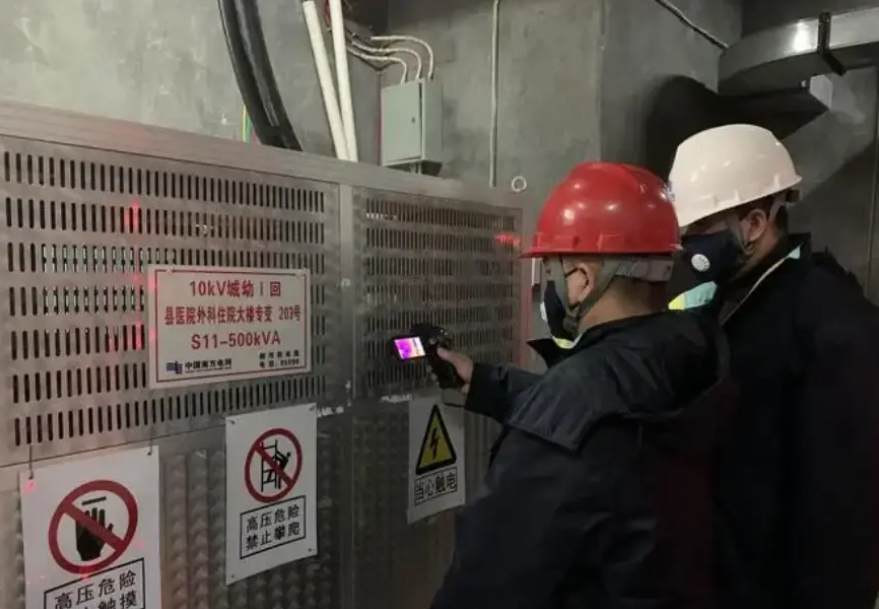
The hospital has introduced wireless temperature measurement devices and installed wireless temperature sensors on the busbars, cable heads, and electrical contacts in the electrical equipment of the distribution room. The monitored temperature data is transmitted to the distribution duty room, where the duty personnel can monitor the electrical contact temperature data of the power distribution equipment in real time without having to go to the site. Once the temperature of the equipment is abnormal, the wireless temperature measurement system will immediately sound an alarm, and the duty officer can detect and take measures to ensure the safety of the hospital’s power supply as soon as possible. The temperature monitoring system stores these operational data in real-time in the computer, which can also serve as a basis for future operational analysis and provide data support for the daily operation and maintenance of hospital electrical equipment.
The RFID wireless temperature measurement system can provide different wireless temperature measurement solutions based on the complex distribution network of the hospital, and monitor the temperature of electrical equipment in real time. Wireless communication is usually used in conjunction with receiving terminals, communication serial ports, electronic computers, etc. Wireless temperature sensors transmit temperature data to the wireless temperature measurement centralized collection host through RFID technology, and then upload the data to the wireless temperature measurement system through different communication channels. Suitable for various special measurement and control situations such as outdoor, high temperature, humidity, dust, high voltage, inconvenient wiring, or inability to provide power supply on site. This system solves the cost of on-site installation and wiring, overcomes the impact of complex installation environments, and achieves real-time online monitoring of the temperature of electrical equipment itself.
RIFD wireless radio frequency identification technology uses non-contact fast information exchange and storage technology through radio waves, combines wireless communication with data access technology, and then connects to a database system to achieve non-contact bidirectional communication, thus achieving the purpose of identification. It is used for data exchange and connects an extremely complex system. In the recognition system, the reading, writing, and communication of electronic tags are achieved through electromagnetic waves. According to the communication distance, it can be divided into near-field and far-field. Therefore, the data exchange method between read/write devices and electronic tags is correspondingly divided into load modulation and backscatter modulation.
A complete RFID system consists of three parts: a reader, an electronic tag, and a data management system.

RFID Read Write Device
Embedding a high-precision and ultra-low power consumption (1 microwatt) temperature sensor chip on a traditional RFID chip, and incorporating a 512 bit erasable non-volatile data storage unit for storing user information and other data. The RF chip communication interface supports the EPC Global C1G2 v1.2 communication interface protocol. When users read the chip, in addition to obtaining a regular ID number, they can also obtain real-time temperature information. The measurement range can reach -40 to+125 degrees Celsius, with an error of 1 degree after single point calibration at room temperature, and an error of less than 0.1 degree between 35 and 42 degrees Celsius. The chip has good consistency.
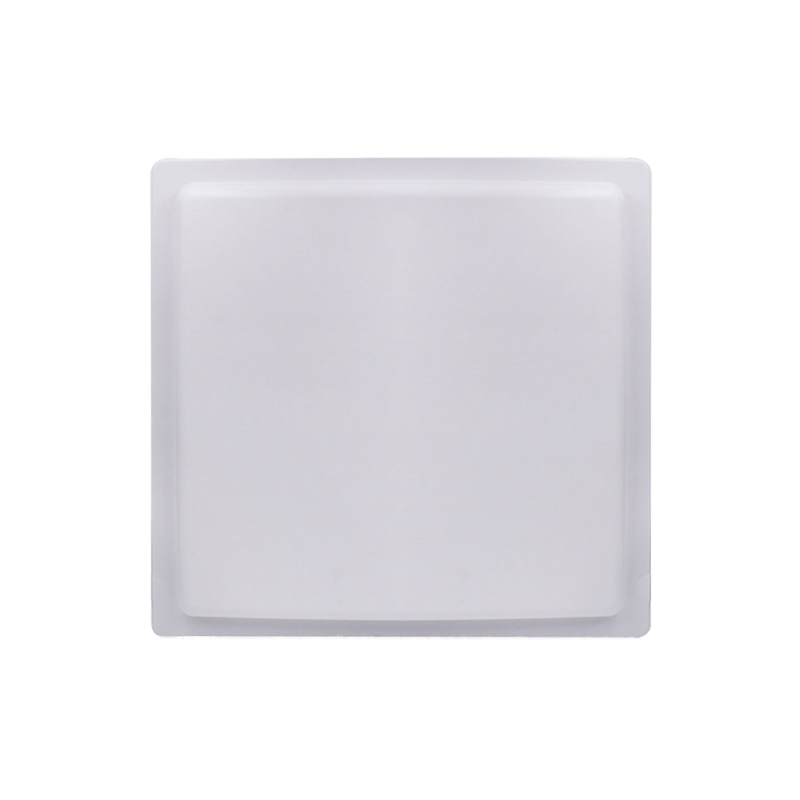
12dBi Circular Linear RFD UHF Reader Antenna
Passive wireless temperature measurement
Wide temperature measurement range and high accuracy
Real time effectiveness, stable and reliable
Can withstand high temperature environments exceeding 220 ℃
Anti metal design, capable of meeting temperature measurement requirements on metal surfaces
Satisfy a wide range of industrial applications
Easy installation and debugging
Low operation and maintenance costs